Done with the mythologies of the Mediterranean
Published in print as “Une relève qui refuse d’hériter” (A new generation that refuses to inherit)
Against the grain of Mediterranean exhibitions that celebrate a shared heritage and a dialogue between the two shores, “Sur la frontière du temps” brings together graduates of the region’s art schools to diagnose the present, without fixed representations or clichés.
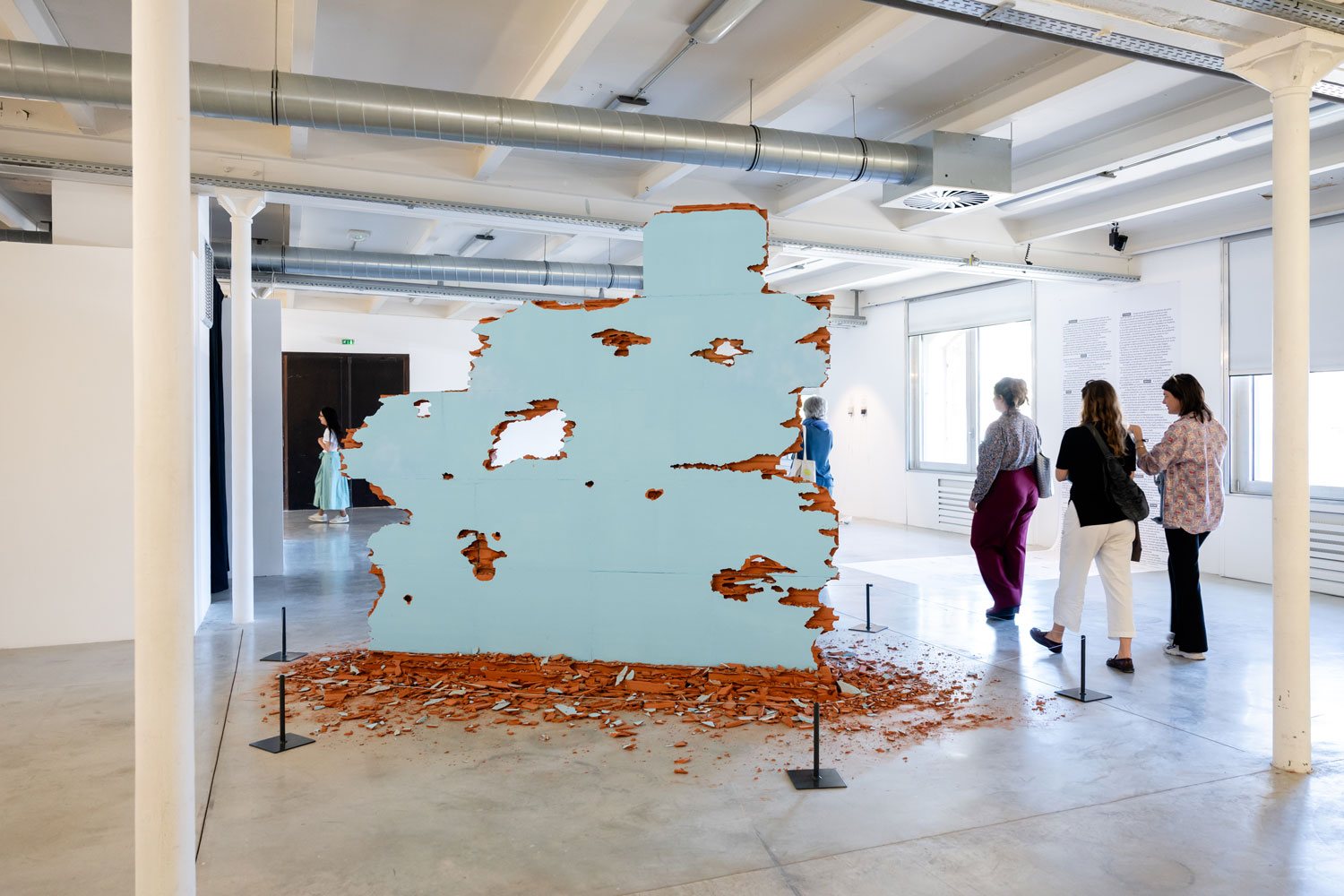
The exhibition’s title sets the tone from the start. “Sur la frontière du temps, une relève méditerranéenne” comes from The Archaeology of Knowledge, where the philosopher Michel Foucault describes “the border of time that surrounds our present and indicates it in its otherness.” The sentence ends on “that which, outside ourselves, delimits us.” This is where Foucault leaves archaeology for an ontology of the present, to diagnose what we are. Choosing this sentence as the title of a Mediterranean exhibition is therefore not to summon a heritage memory or open a soothing civilisational dialogue between two shores. The Mediterranean is not the subject but the vantage point, the place from which this diagnosis is written in 2026, from shores marked by several colonialisms, where violence settles day after day, where art schools have trained a generation that no longer believes in inherited borders.
Doubting History
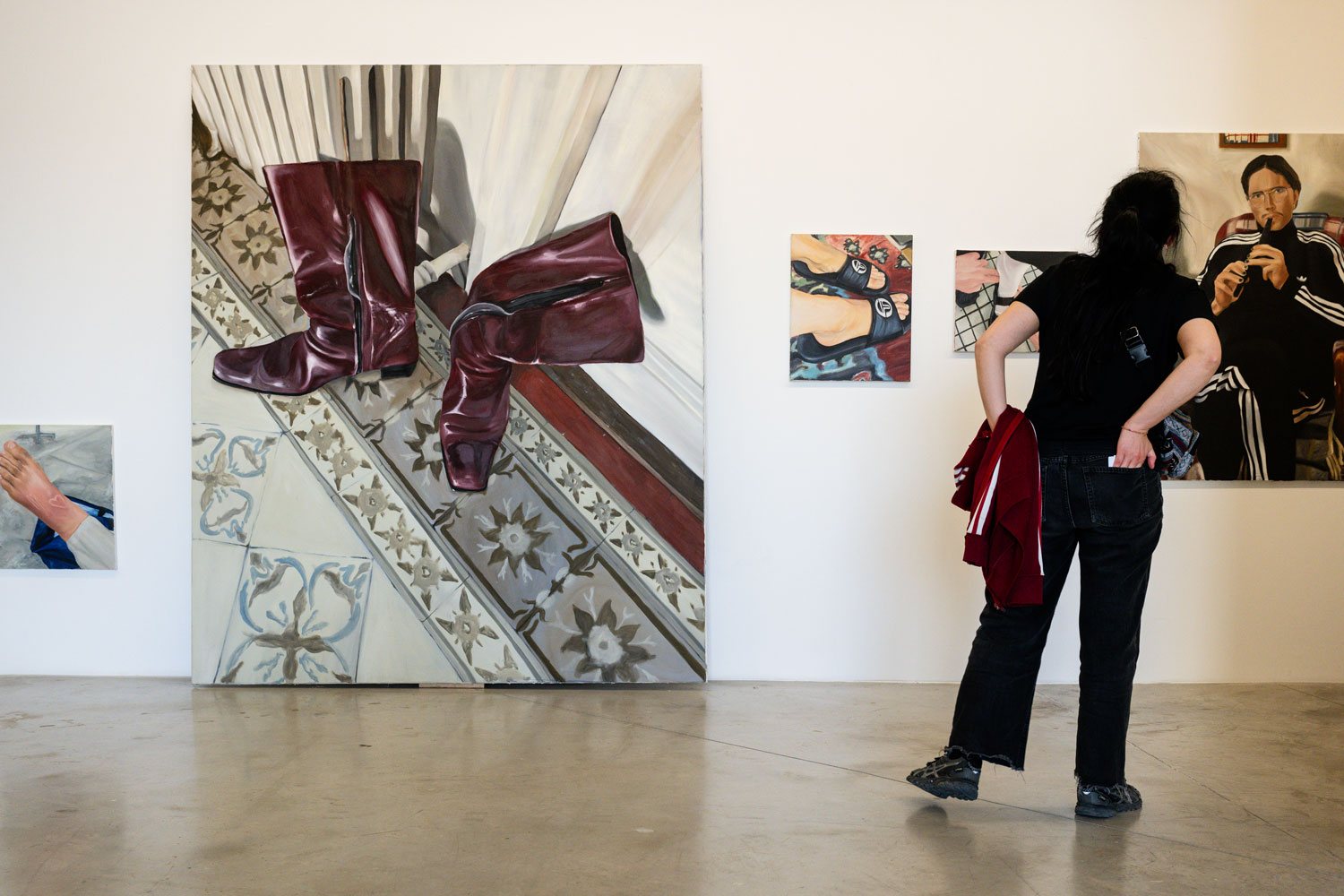
The curator Soukaina Aboulaoula has brought together sixteen graduates of these schools, in Tétouan, Algiers, Beirut and the south of France. She claims “a logic of encounter rather than grouping” and refuses “to assign the works to their geography of origin.” If grouping is the classic institutional operation in which artists are sorted by country and presented as representatives of their national scene, encounter assumes there is no fixed identity to represent, because all of them already live the in-between that the border of time designates. The exhibition thus refuses the role of shop window and becomes a place where the same question is examined together: what constitutes us, at this moment, on this sea?
No Mediterranean allegories, no shared symbols, no poetry of olive trees or harbours. What comes back instead is the unease of matter that rots, of a memory that slips away
The answer can be read in the room, and it does not go through the expected figures. No Mediterranean allegories, no shared symbols, no poetry of olive trees or harbours. What comes back instead is the unease of matter that rots, of a memory that slips away, of a colonial narrative that has not finished settling into the present. Amir Youssef makes this the heart of his film Apoléon. At the Musée de l’Armée in the Invalides, he comes across a diorama of the Egyptian campaign, figurines “frozen in the display cases.” Who decided that History stopped there, under glass? In the film, Napoleon’s soldiers speak Egyptian Arabic and, asked about the source of their story, answer: “Wikipedia.” “I wanted people to doubt history, to doubt it even more,” he sums up. The diorama we take for a museum piece keeps manufacturing the gaze from which Europe tells itself the Mediterranean.
Oumayma Abouzid Souali returns to the chemical bombings the Spanish army poured over the Rif between 1921 and 1926, targeting crops, water sources, soil. The official trace of this episode remains thin. To make it tangible, the artist draws with incense. The smoke traces, the work composes itself as it burns, and the cartography that emerges, made of smells and combustions, puts the north of Morocco and the south of France in dialogue through the memory of a violence the archives say almost nothing about. She links this work to the exile of Abdelkrim El Khattabi on Réunion (1926–1947), where the Rif leader grew geraniums to survive. The passage from a world of toxic gas to a world of perfume is here the diagnosis of one colonial body that stretched from one geography to another.
What traces us
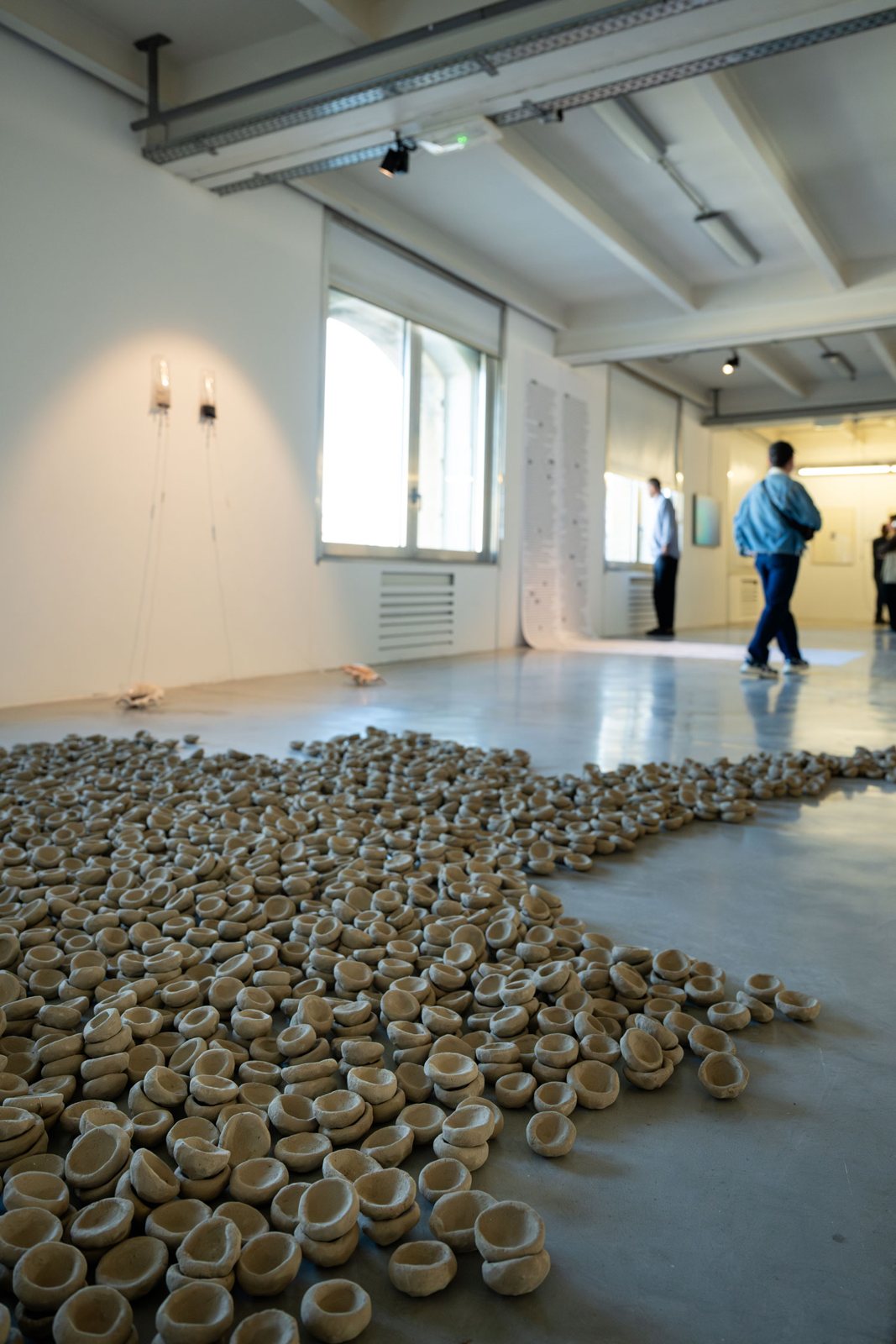
Mounia Bouchra extends this unease by applying it to herself. Her installation Passages starts from interviews with Maghrebis living in the south of France, around a single detail: the object you take with you when you cross. An earthenware cup, a smell, a material. Bouchra translates them into ceramics and swells their scale almost to monuments, but does not erase her unease: “Questions arise about the legitimacy of working from stories or archives that are not ours.” The scruple remains visible in the work. It is itself a diagnosis of the present: by what right, by what legitimacy, do we, artists trained on both sides of the sea, speak of others?
Anouch Basbous shares this vertigo. Her video Flood, shot in a cemetery on the outskirts of Beirut, shows dark water slowly covering the graves, plants and engraved names mingled, “water whose source I don’t know.” Basbous gives up on repair, “we don’t have time,” the violence of the present prevents mourning. She prefers to stay with the trouble. Hence her phrase, “a danse macabre with one’s own archives,” and the sentence she borrows from the Palestinian thinker Walid Daqqa, who died in an Israeli prison: “I do not want to return to the Palestine of the past […]. I want to return to the Palestine of tomorrow.” The past stops being a place to go back to and becomes a reservoir activated towards what is to come.
The rawest energy of the scenes the exhibition summons is elsewhere, more chaotic, less polished for biennials and residencies
One suspicion remains, and it should be stated. The exhibition remains very legible to the European institutional eye, and that may be the limit its own Foucauldian ambition imposes on it. Diagnosing the present is a sophisticated, elegant philosophical project, legible in the galleries. The rawest energy of the scenes the exhibition summons is elsewhere, more chaotic, less polished for biennials and residencies. The most striking works are in fact those where this refinement cracks a little. Youssef because he laughs at the museum that shows him. Basbous because she says, in four words, that there will be no consolation.
“Sur la frontière du temps” nevertheless takes on what its rivals still refuse. It makes a Mediterranean exhibition neither a celebration, nor a dialogue, nor a shop window, but an optical instrument. If the past is that which, outside ourselves, delimits us, then looking at these sixteen works together is an attempt to see what traces us, here, in 2026, on both sides of this sea. It is a rare demand. And it is probably the only honest way to keep talking about a Mediterranean scene without betraying it.