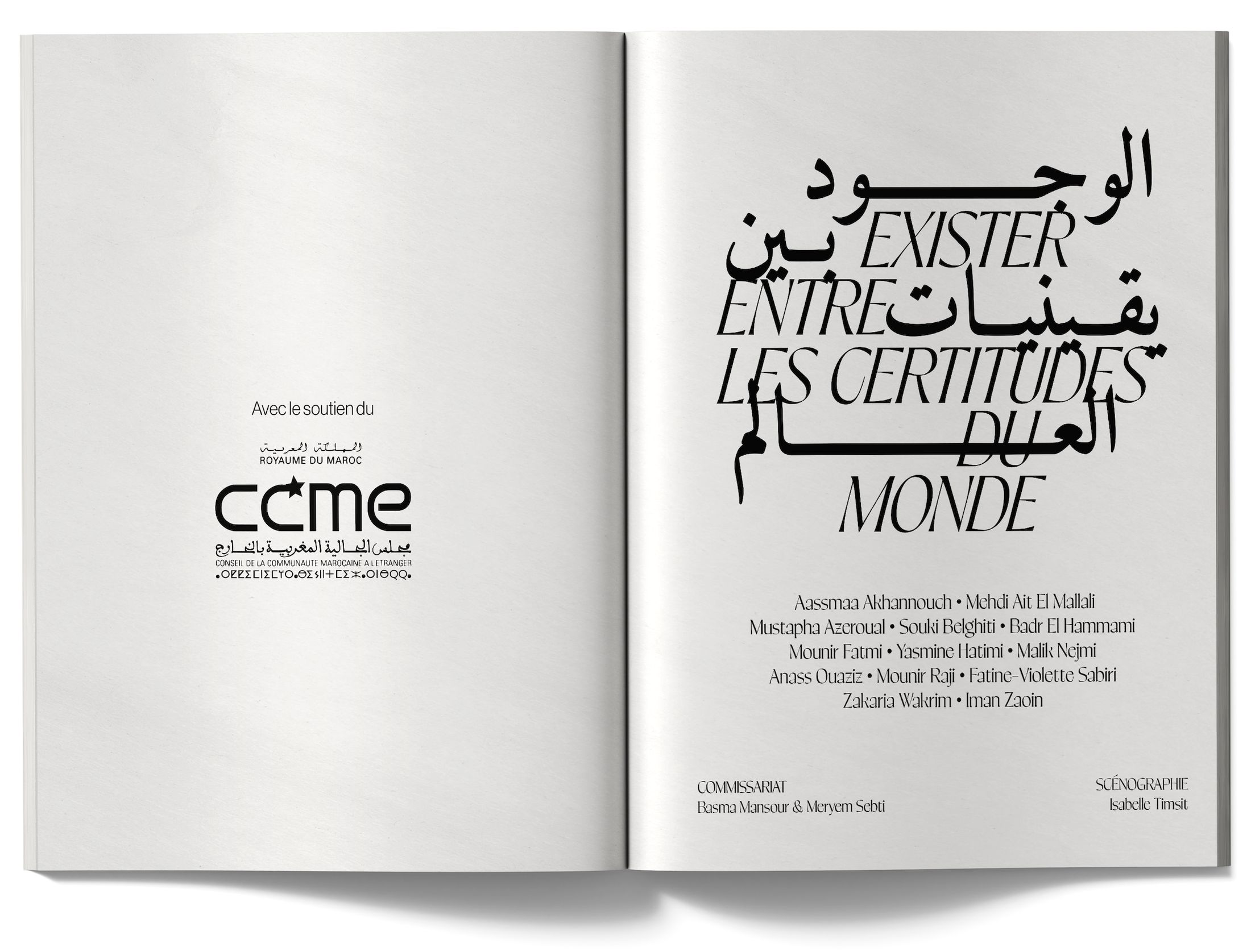
Existing between the world’s certainties
Curatorial text, exhibition catalogue
The world’s certainties are the conceptual architectures that economic systems and social structures erect to organise reality into sealed, reassuring categories. They assert with peremptory assurance that identity is a stable essence anchored in origin, that belonging is an exclusive property tied to territory, that culture is a coherent heritage passed from generation to generation without rupture or transformation, that home is a fixed geographical place one “comes from” and to which, one day, one ought to “return.”
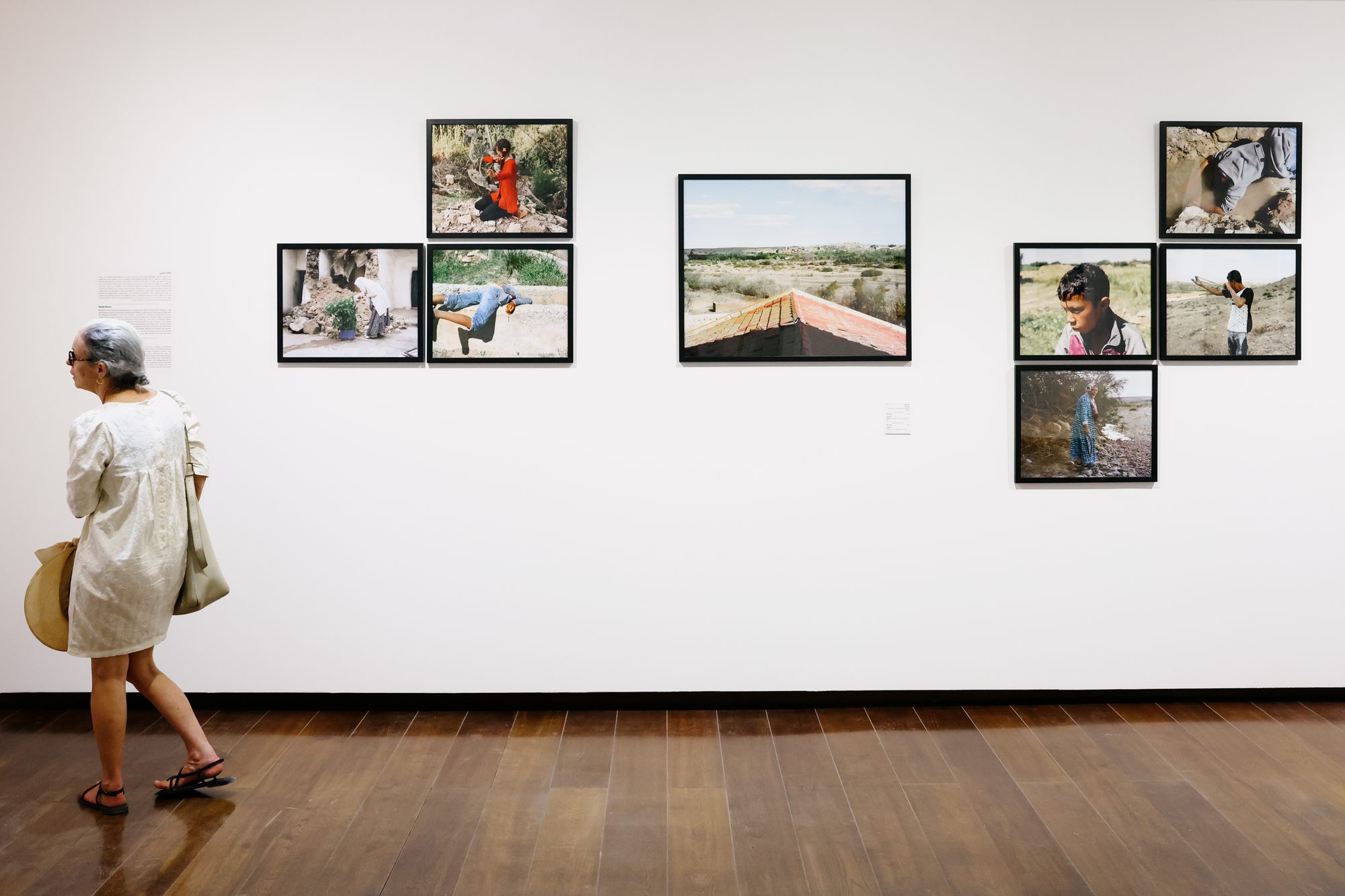
These certainties draw clear borders between “us” and “them,” the legitimate and the illegitimate, the authentic and the impostor, the citizen and the foreigner. They work as totalising narratives that promise existential security on condition of full adherence. But existing between these certainties, which is precisely the position the diasporic experience reveals and inhabits, does not mean occupying a midpoint on a line drawn between two fixed poles, does not mean being suspended in a melancholy in-between, between two equally inaccessible worlds. In video games, no-clipping refers to a glitch, an error in the code that lets the player walk through walls, pass through the solid surfaces that normally delimit the playable space and define the borders of the possible world. Activated on purpose with cheat codes or by accident through a bug, no-clipping propels the player into an ethereal state where the game’s physical rules no longer apply according to their usual parameters. You can walk through buildings as if they were ghosts, fall through the floor into the depths of the digital void, float in the space beyond the visible limits of the world the developers had carefully built to contain the experience. What is then revealed, in all its technical crudeness, is the game’s hidden architecture: unfinished textures never meant to be seen up close, unrendered spaces that exist as pure geometry without visual dressing, the digital void that exists “behind” the façades carefully built to create the illusion of a coherent, habitable world. The player sees behind the scenes, the raw mechanics that hold up the illusion of coherence. They are no longer really “in” the game on the terms the developers intended, by the rules that define what it means to “play,” but they have not left it altogether either, since they keep interacting with the digital environment, since their avatar still exists in that space even as it crosses it in an unforeseen way. They exist in an intermediate, spectral, ghostly state, where the borders that structure normal experience, between inside and outside, between playable and unplayable, between built world and digital void, have stopped working according to their usual binary logic. This position reveals something fundamental about the very nature of the game: that walls are only code, that limits are arbitrary and could be drawn otherwise, that what seemed solid and natural is held in place only by technical convention and collective adherence to established rules.
Existing between the world’s certainties resembles this state of no-clipping. Certainties of identity and culture work exactly like the solid walls of a video game: they delimit the space of what is possible and thinkable, define what counts as “real” and “legitimate,” create apparently natural and self-evident borders between inside and outside, between those who belong and those who do not. For most people these walls work so perfectly that they become invisible, that they are no longer perceived as constructions but as the natural, inevitable structure of the real. But the diasporic experience activates, in a way, a glitch in this social and conceptual architecture. Suddenly the walls become porous, their outlines blur, their apparent solidity turns out to be only appearance.
“How do we inhabit a world whose certainties are coming undone, without rushing to manufacture new ones to fill the void?”
You pass through the categories that are supposed to contain and define you in a stable and final way. You find yourself in spaces that official structures do not recognise, do not name, cannot map according to their binary logics of classification. You exist in the ethereal state of someone who sees behind the scenes, who perceives their constructed, arbitrary, contingent character.
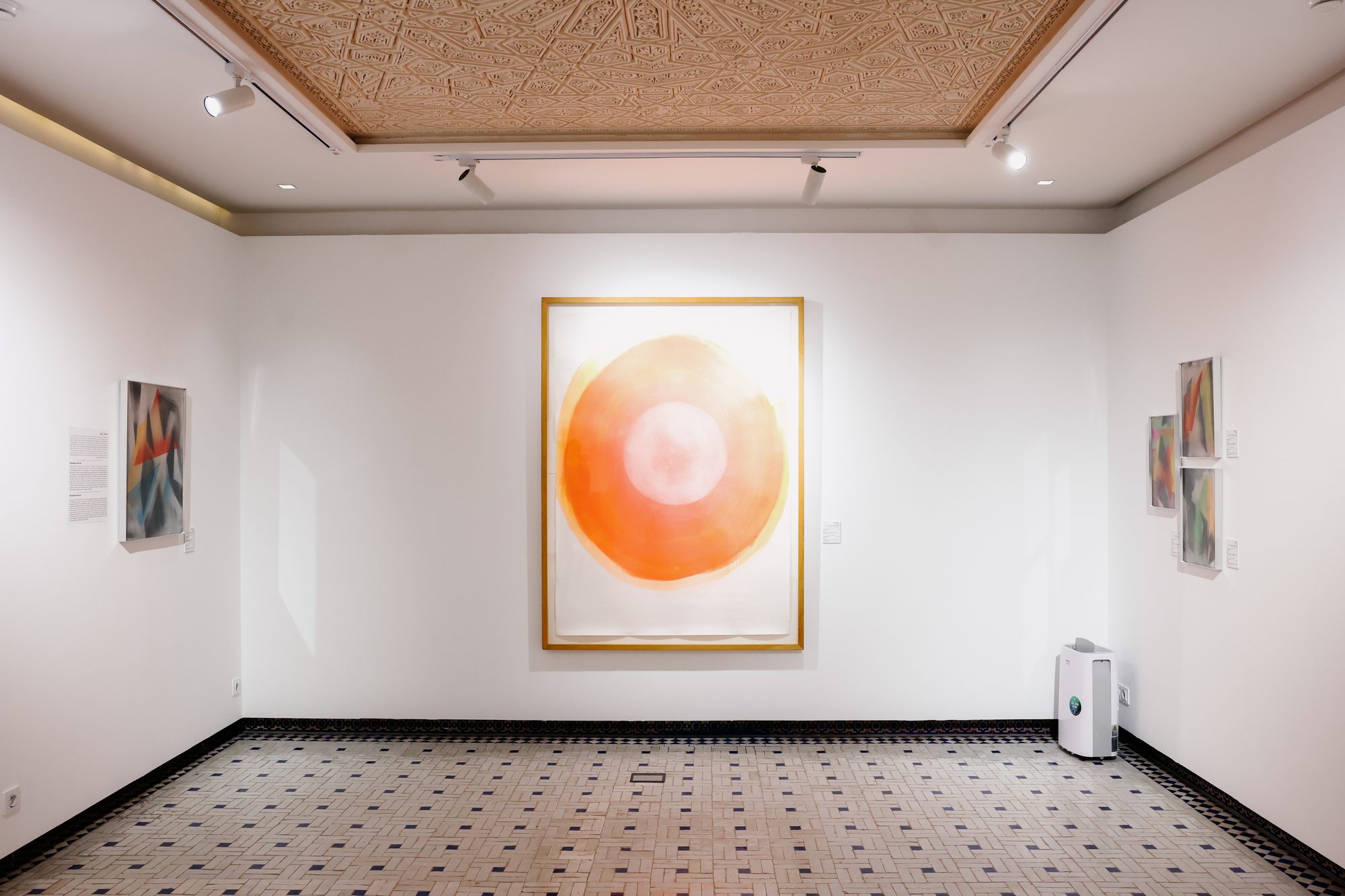
For a long time I refused the word liminality to describe this condition. Not out of theoretical coquetry or a taste for intellectual paradox, but because the term carries the smell of incompleteness, the implication that diasporic subjects are half-formed beings, suspended in perpetual transition, waiting for permission to finally enter the fullness of a stable, defined identity. As if this condition were fundamentally one of lack, of the not-yet-accomplished, of the almost-but-not-quite-arrived. Liminality, in its classical anthropological sense, designates the intermediate phase of rites of passage, the threshold at which participants no longer hold their pre-ritual status but have not yet reached the post-ritual status they will occupy once the rite is complete. It is a temporary position by definition, a moment of transition that finds its meaning precisely in being provisional, in leading somewhere, in necessarily ending in a resolution, a stable incorporation into a new social state. But to apply this framework to the diasporic experience is to presuppose a stable state to be reached, a possible resolution of the tension of identity, a future moment when one would finally have “arrived” somewhere, fully integrated into a community that would recognise us without ambiguity as its own. It keeps up the fiction that the poles are solid even if the passage between them is murky. Words always betray those they claim to describe. “In-betweeners,” “hyphens,” “bridges between two worlds”: so many metaphors that assign diasporic subjects the function of connector between entities that would enjoy the privilege of being full, complete, finished, stable in their identity and belonging. These metaphors maintain the binary they claim to complicate, they carry forward the logic of two fixed worlds between which certain unfortunate or privileged individuals (depending on the perspective) would be stuck or free to move. No-clipping, however, offers a metaphor that does not presuppose the solidity of the poles, because it shows that the walls themselves are the problem, not the space between them. It is a metaphor of crossing rather than of dwelling in an in-between, a metaphor of seeing behind the scenes rather than of waiting at the threshold.
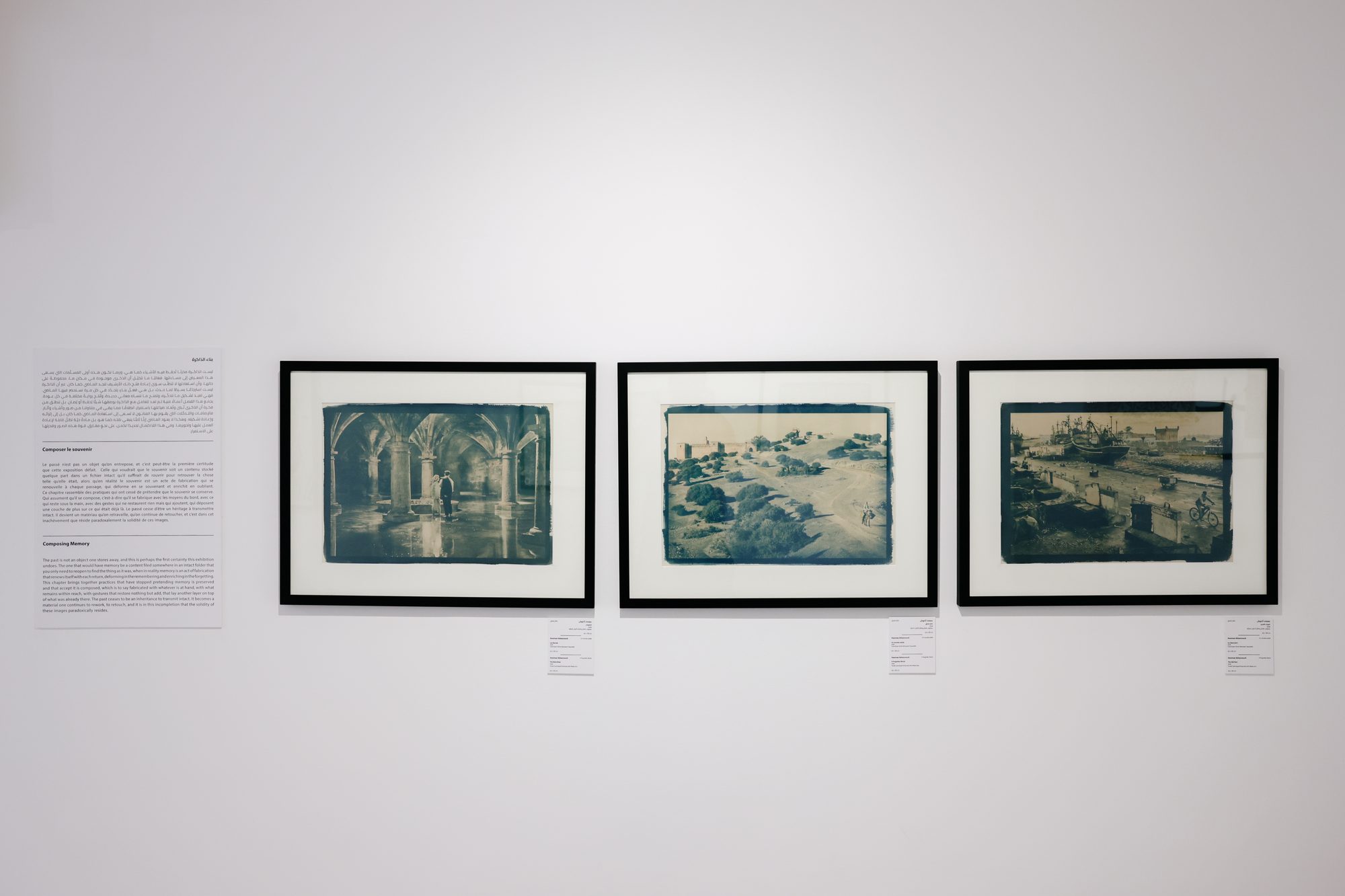
Living between cultures, languages and nations produces subjects who see, with a sometimes painful clarity, the deeply constructed nature of every category of identity, who understand borders as political fictions with absolutely real and often violent material consequences. The artists of the Moroccan diaspora (and by extension all those who live the experience of geographical dispersal, of forced or chosen displacement, of multiple belonging) exist precisely where these certainties reveal their constitutive fragility, their contingent and historically determined character.
In an age of accelerated economic and cultural globalisation, of mass migrations both voluntary and forced, of identities negotiated and fluid rather than inherited and fixed, of digital technologies that radically deterritorialise communities and allow transnational belongings, of ecological crises that are gradually making some territories uninhabitable and creating populations of climate refugees, of wars and structural violence that displace whole populations beyond national borders, the diasporic position is no longer the pathological exception or the borderline case but the emerging paradigm of the contemporary human condition. We are all gradually, sometimes painfully, discovering that the certainties that solidly structured our parents’ world, culture as a stable heritage passed on unbroken from generation to generation, identity as an immutable essence given at birth and kept until death, no longer hold. The walls are becoming porous for everyone, not only for migrants and visible exiles; categories are gradually dissolving even for those who thought themselves protected by majority belonging; borders are revealing themselves as contingent political constructions even for those who never physically cross them; identities appear as negotiated performances even for those who think they simply “are” what they are. The glitch of no-clipping is spreading, becoming a universal condition rather than a diasporic exception.