Gaza, beyond the images of catastrophe
Published in print as “Une archive de Gaza à l’épreuve du présent” (A Gaza archive put to the test of the present)
In 2018 the artist Kegham Djeghalian Jr found three boxes of negatives left by his grandfather, who in 1944 founded Gaza’s first photography studio. He turned them into an exhibition that has travelled around the world, and its route and reception say a great deal about what we now ask of an image of Gaza.
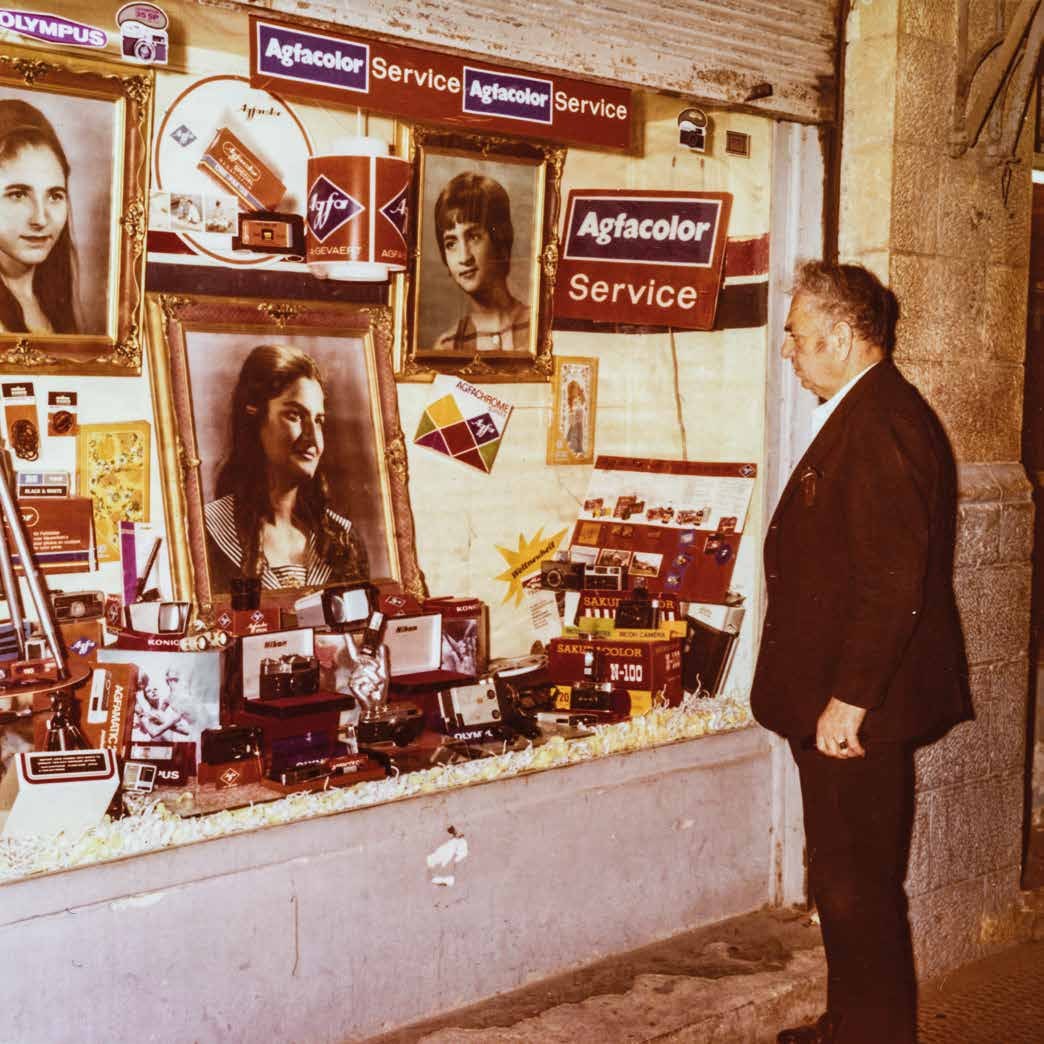
At the start there is very little. Three red boxes of negatives and a few scattered family memories. In 2018 the Palestinian-Armenian artist Kegham Djeghalian Jr found these boxes forgotten at the back of his father’s wardrobe in Cairo. The negatives belonged to his grandfather, whose name he bears. A survivor of the Armenian genocide, Kegham Djeghalian Sr had learned photography in Mandatory Palestine before opening Gaza’s first professional studio in 1944. He worked for no publication; he simply wanted to document everything: weddings, celebrations, daily life, but also the refugee camps born of the Nakba and the Khan Younis massacre of 1956. When he died in Gaza in 1981, the studio passed to his assistant Maurice Tarazi, then to Maurice’s brother Marwan, who kept a large part of the archive. For decades these images remained out of the family’s reach.
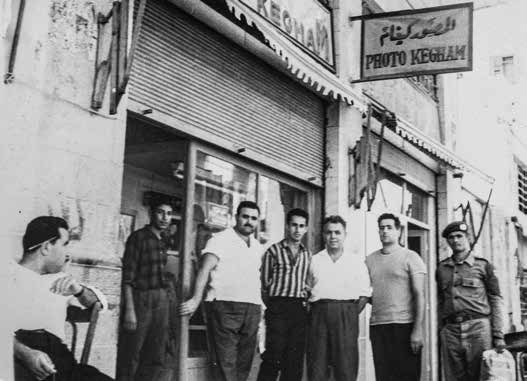
Dividing his life between Cairo and Paris, Kegham Djeghalian Jr first showed his grandfather’s images in March 2021 during Cairo Photo Week. Two months earlier he had managed to make contact with Marwan Tarazi, who showed him the studio’s most famous prints on a video call. The artist kept screenshots of them and chose to show them as they were, because these photographs, he says, had been denied to him and his family for decades. He then coined the notion of “interrupted histories.” He presents the images without dates or captions, sorts them by theme rather than period, and speaks of an unmade archive, an open archive.
Interrupted histories
Removing captions from Palestinian images has a history. In 1983 Edward Said obtained permission to exhibit photographs of Palestinians in the hall of the Geneva Conference, but the UN only allowed him to give the names of places. The images were admitted, their stories were not. Forty years later the Palestinian writer and journalist Mohammed El-Kurd describes the opposite regime. In February 2023, in his lecture at Princeton and then in the book Perfect Victims and the Politics of Appeal (Haymarket, 2025), he shows that Palestinian speech is now admitted, on condition that it proves its humanity. Sympathy goes to the “perfect victim,” wounded enough to claim nothing. The caption once served to silence. It now serves to build a case. By refusing the caption, Kegham Djeghalian Jr removes his grandfather’s photographs from that case. The gesture has a reverse side, and it is the first trap of such an exhibition. An undated image escapes the tribunal. It also leaves the viewer to supply the context, and the viewer always supplies it with what they already know, or with what they have been taught to believe.
On 19 October 2023 an Israeli strike hit the compound of the Greek Orthodox Church of Saint Porphyrius, where hundreds of civilians had taken refuge. Marwan Tarazi was killed there with his wife and granddaughter. For Kegham Djeghalian Jr, this death meant the final loss of the part of the Kegham archive that had stayed in Gaza. Incompleteness stopped being a curatorial stance and became a fact of war. The “interrupted histories” are no longer a metaphor.
Before, but before what?
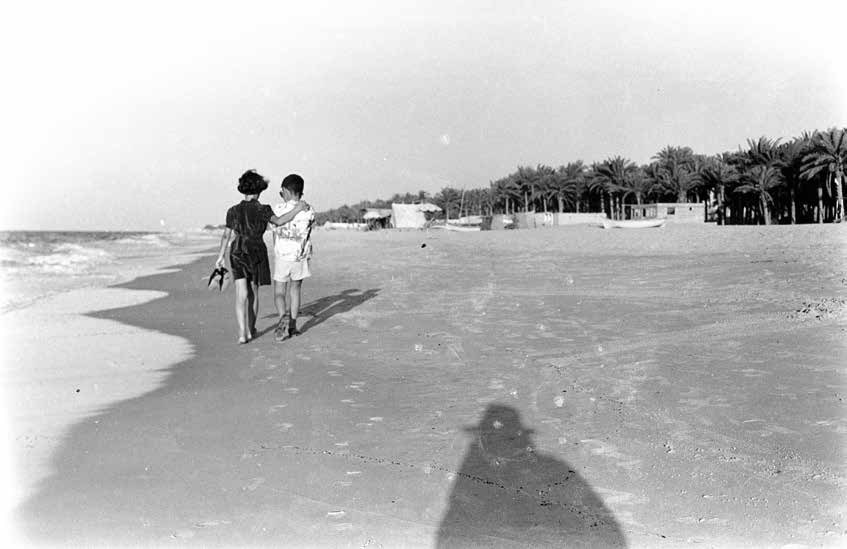
This is when the controversy over the word “before” broke out. The artist discovered that Vice had republished the interview he gave it in 2021, adding context about Hamas’s seizure of power, which came decades after the photographer’s death. The same weddings, the same beaches became Gaza before Hamas. Kegham Djeghalian Jr protested. His “before” was before the Israeli occupation, and all the images he had given the magazine dated from before 1967. Here the first trap shows its full reach. The archive refused to date itself. Everyone supplies their own date, and each date tells a different political story. Before the occupation, before the blockade, before Hamas, before the horrors: the word serves everyone, and the politics of these images lies entirely in what is put after it.
An exhibition makes an archive visible but does not necessarily protect it. Showing costs little, preserving commits, and the project circulated all the better as its object became unrecoverable
The reception then changed tone, and not in one country only. In April 2024, when the project returned to Cairo at the Institut français d’Égypte, the Cairo press stressed that it resonated more than ever as bombs kept falling on Gaza. Kegham Djeghalian Jr now speaks of an alternative historiography against erasure. A grandson who was unpacking boxes finds himself charged with carrying a collective memory. The exhibition went to the Photographers’ Gallery in London, then in 2025 to the Fonderie Kugler in Geneva and the 16th Sharjah Biennial, placed under the sign of the act of carrying (“to carry”). In Sharjah the studio’s façade was rebuilt in the old souk, among the stalls. The critic of the Egyptian outlet Mada Masr found the appearance of Gaza in the middle of this market disconcerting and judged that the careful replica bordered on fetishism. That is the second trap. An archive that refused to close its story is given a set, and a place whose destruction is watched every day becomes a scene to visit, reconstructed elsewhere for others.
The project was shown in France for the first time at the Centre Photographique Marseille (CPM) from 16 May to 12 September 2026, under the title “Photo Kegham de Gaza, une archive inachevable.” Bringing together around three hundred of the nine hundred or so images found in the boxes, it was part of the Saison Méditerranée and the satellite programme of the Rencontres d’Arles. The CPM framed the exhibition with the notion of “interrupted histories,” noting that the research, first centred on the figure of the grandfather, gradually opened onto a wider reading of Gaza. It sees in it an anti-archival stance, a para-archaeology that prefers the fragment to chronological reconstruction.
“Free people, laughing, dancing”
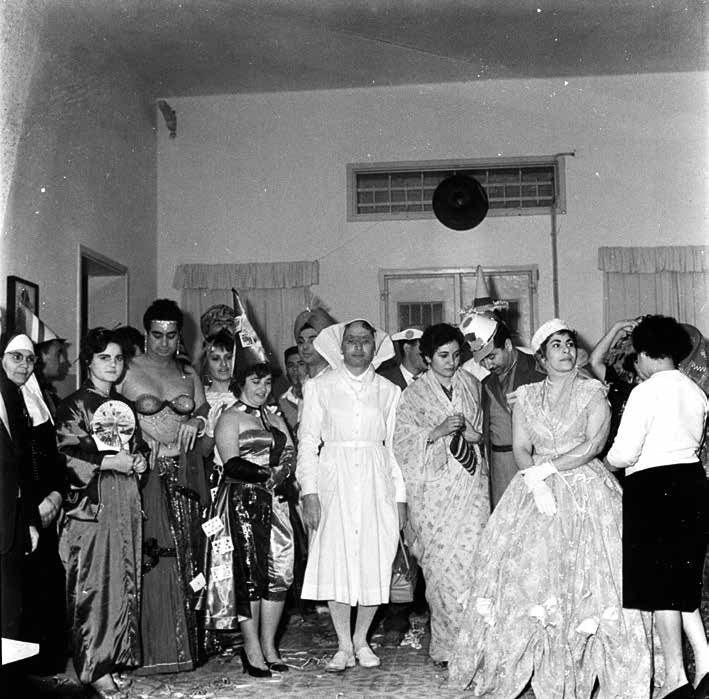
The press, for its part, converges. Arab News describes poignant echoes of a better time, now impossibly distant. AFP quotes a Marseille visitor who feels she is leafing through a family album and speaks of a Gaza “we no longer know.” The website Toutma headlines on “fragments of life before” and says it discovered “free people, laughing, dancing,” a Gaza that the West tends to forget. The third trap presents itself as kindness. Not all these texts speak of humanising, but their logic leads there. If these images give Gazans back their humanity, it is because it was missing from the images of war, as if suffering took something away from those who endure it. And that humanity only returns with what the viewer recognises from their own life, a wedding or a beach. The “normal” Gazan must be similar enough to be recognised. In both cases a proof is demanded, and the outside gaze remains the judge of its worth.
Yesterday’s Gaza is admissible; today’s must still justify itself. The importance of the Photo Kegham project lies in making this asymmetry visible
The fourth problem plays out far from the galleries. In 2021 several options existed to save the collection that had stayed in Gaza: the Palestinian Museum’s digital archive centre offered to digitise it, while some suggested having it bought by a European institution. Today the fate of these negatives is unknown. Meanwhile, the three boxes from Cairo have toured the art world. An exhibition makes an archive visible but does not necessarily protect it. Showing costs little, preserving commits, and the project circulated all the better as its object became unrecoverable. This route says something about the world that receives it. Since 2023 the image of Gaza has lived under two regimes. Images taken in the Strip by its inhabitants are received as testimonies to be verified, suspected before they are believed. Images of its past enter biennials and art centres, where they are received with emotion. Yesterday’s Gaza is admissible; today’s must still justify itself. The importance of the project lies in making this asymmetry visible. From 16 October to 15 November 2026 the project is shown in the United Kingdom, as part of the Bristol Photo Festival. The negatives of “Photo Kegham” travel, but the people of Gaza leave the Strip only in a trickle.